First, the honest summary
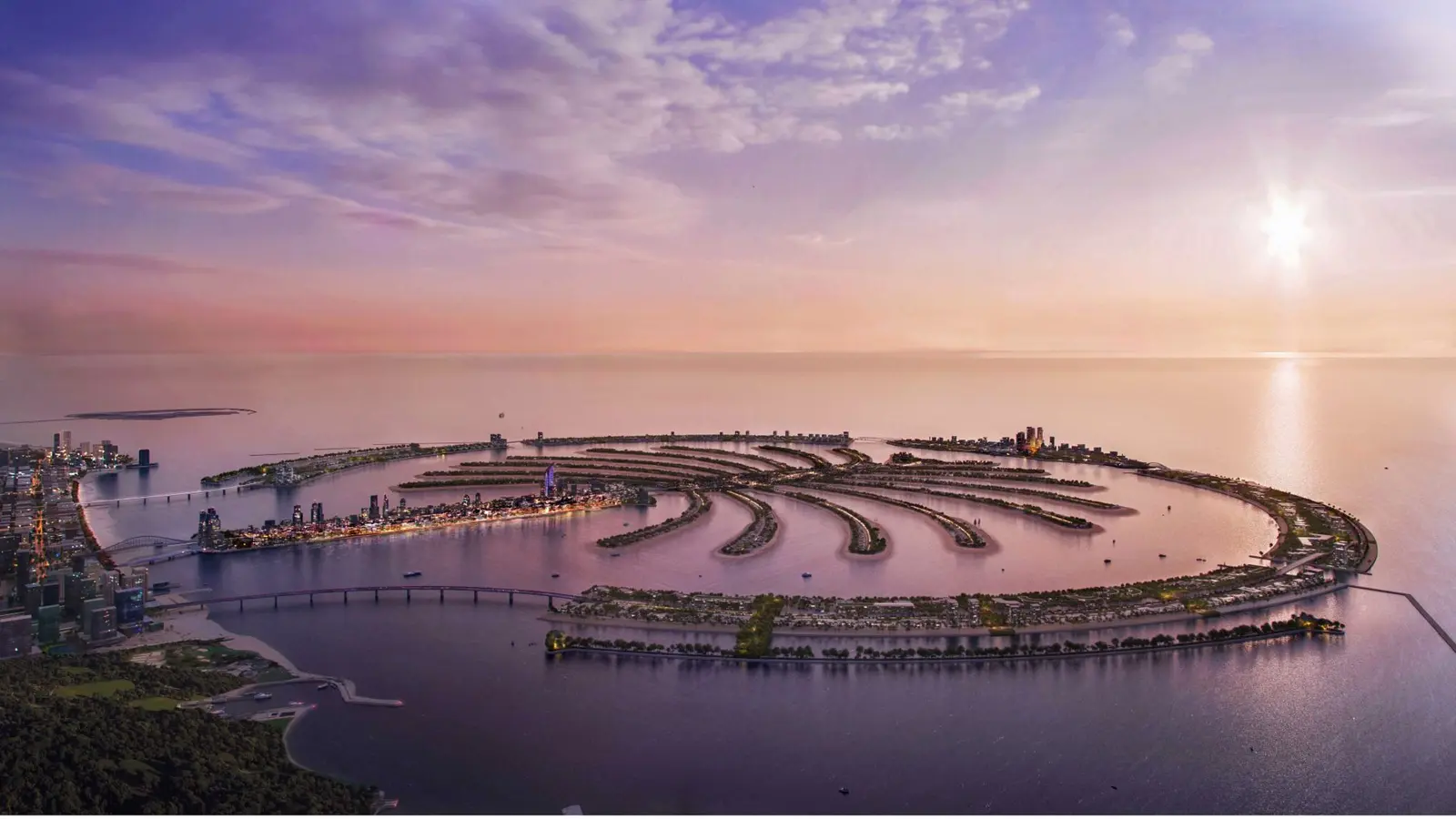
Palm Jebel Ali is Nakheel's relaunched mega-island — planned at roughly twice the size of Palm Jumeirah, with 16 fronds, 90+ km of new beachfront, and capacity for around 35,000 families. Villas in the current phases start around AED 18 million for 5-bedroom homes, rising to AED 29–43 million for premium 7-bedroom product.
The investment case, in one sentence: current pricing sits roughly 60% below comparable Palm Jumeirah product per square foot — and if Palm Jebel Ali matures into even a fraction of what Palm Jumeirah became, early buyers benefit. The honest counterweight, also in one sentence: this is a 10–15 year play on an active construction site, not a quick flip. Both sentences are true. Any broker who tells you only the first one is selling, not advising.
The island in numbers — from Nakheel's own masterplan
Know your districts — location inside the island matters
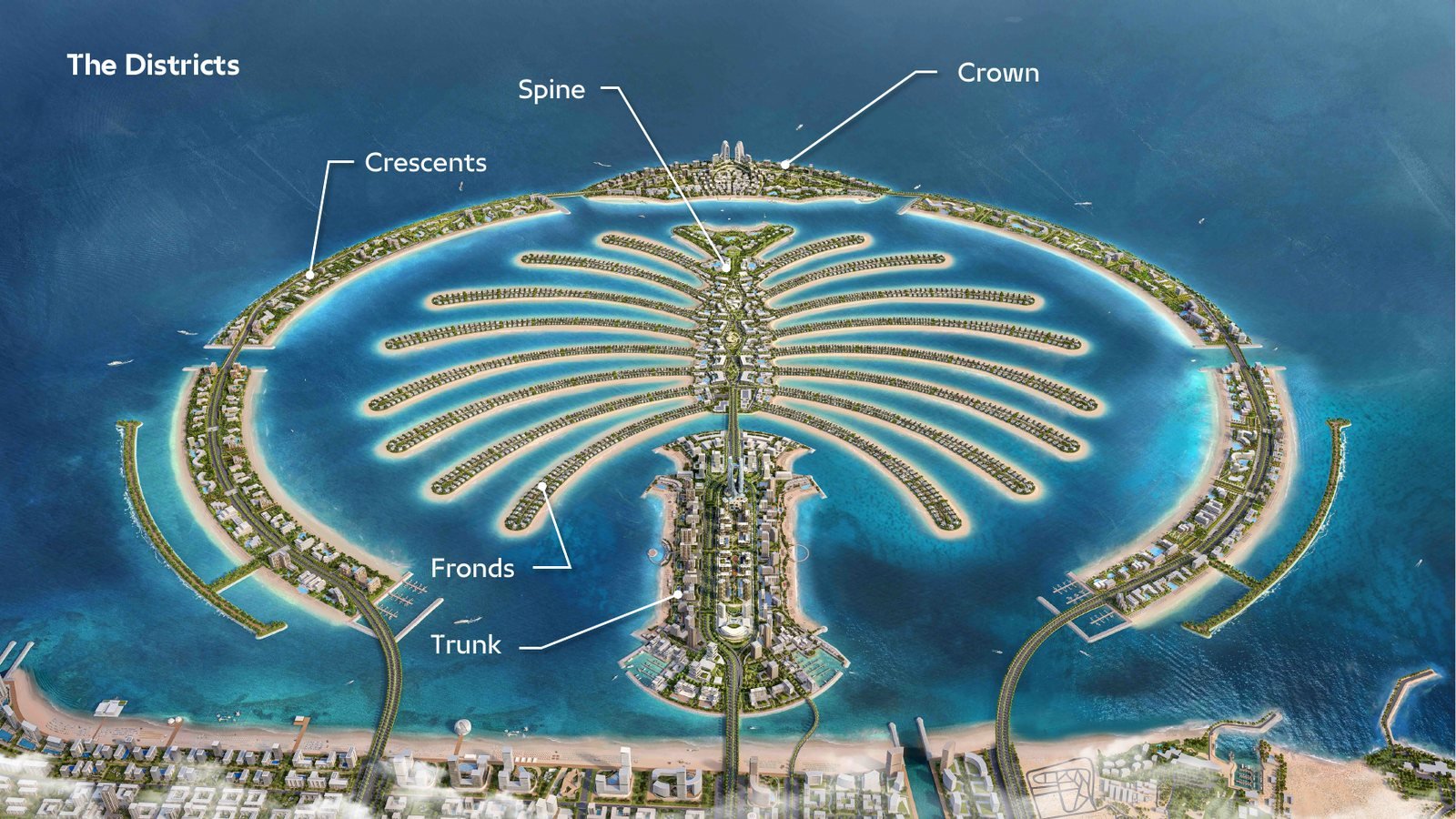
Five distinct districts, five different investments. The Fronds (389 ha, 2,012 plots, ~10,500 residents) are the ultra-luxury villa territory — what's selling now. The Spine (146 ha, 2,400 units) runs through the middle: resort-style residential with the community centres, sports & wellness facilities, district park and mosques. The Trunk (187 ha, 9,200 units, ~33,500 residents) is the dense, energetic entrance district — beach clubs, restaurants, future apartment living. The Crown is the celebratory hub at the top. The Crescents (610 ha, ~20,000 units, ~72,000 residents) wrap the island with the largest future supply.
The Collections — what you can actually buy
| Collection | Type | Plot | Built-up area |
|---|---|---|---|
| Beach Villas | 5–6 BR · 8 designs | ~7,400 sq.ft (20×34 m) | 7,300–8,300 sq.ft |
| Coral Villas | 7 BR · 8 designs | 13,000–19,000 sq.ft (35×34 m+) | 11,300–12,200 sq.ft |
| Premium Plot I | Build your own · 56 plots | avg 23,900 sq.ft | up to ~13,900 sq.ft (FAR 0.60) |
| Premium Plot II | Build your own · 24 plots | avg 26,000 sq.ft | up to ~19,000 sq.ft (FAR 0.74) |
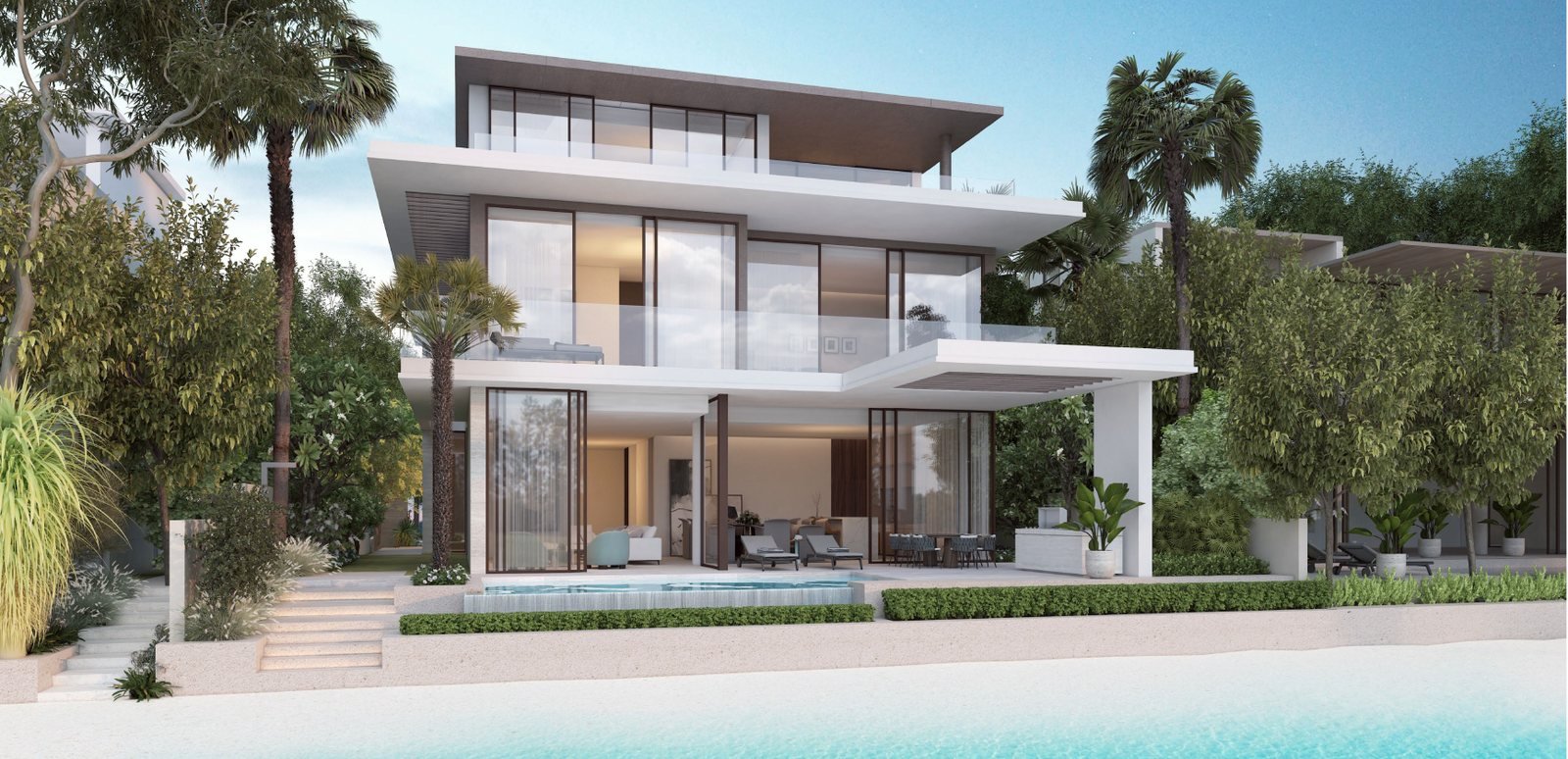
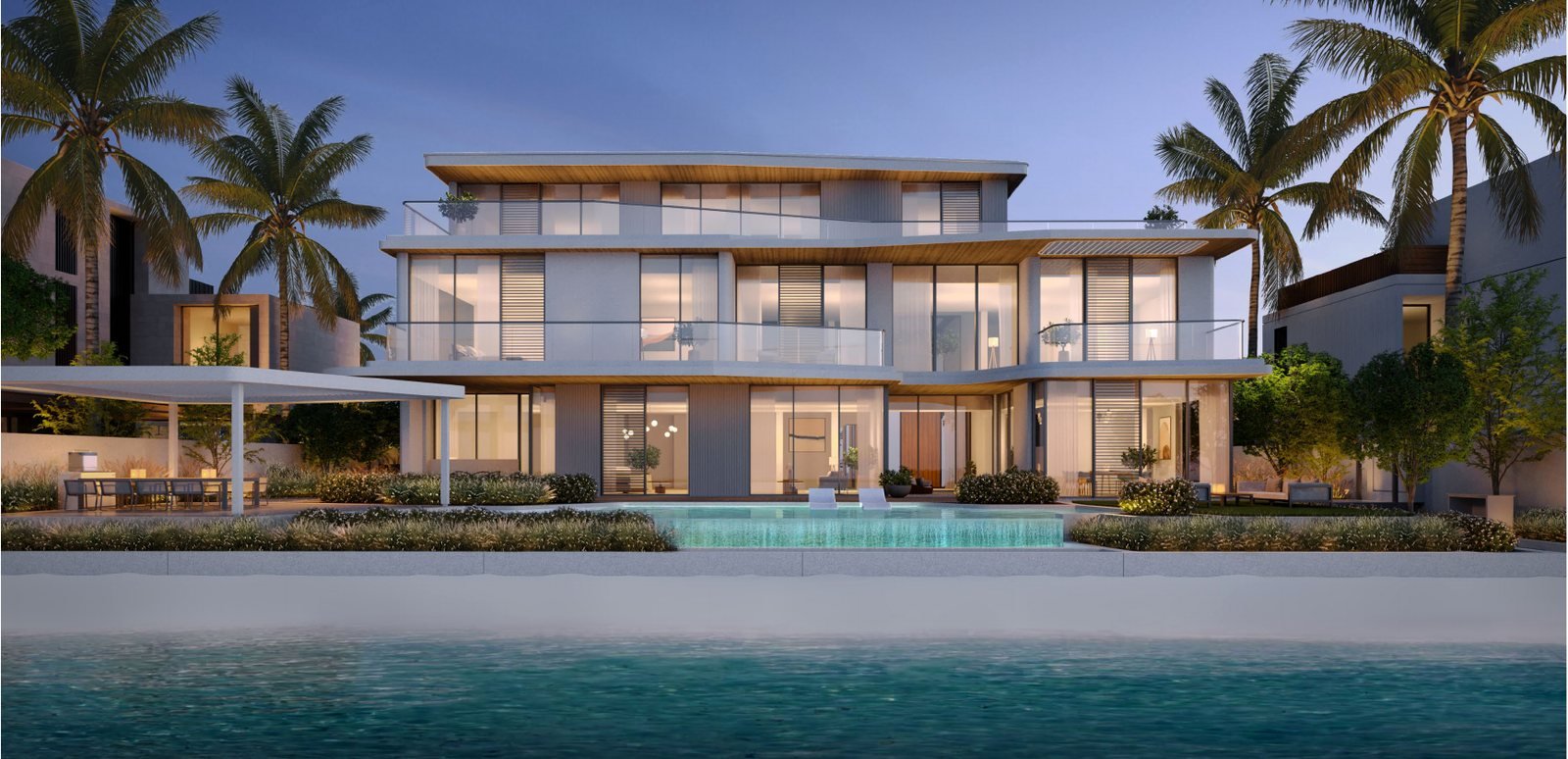
The 16 villa designs carry names like Provence, Indigo Ocean, Sapphire and Azure Blue (Beach Collection) and Hibiscus, Coral Living, Terracotta and Ruby Sunset (Coral Collection). Every bedroom is ensuite; specs include a chef kitchen plus a show kitchen, custom elevator, ground-floor guest suite, beach-facing master, maid's room, an externally accessed driver's room, and parking for 4–6 cars. Premium Plots allow basement + ground + 2 floors, 15 m height, 50% plot coverage.
Bigger fronds, wider water — the upgrade over Palm Jumeirah
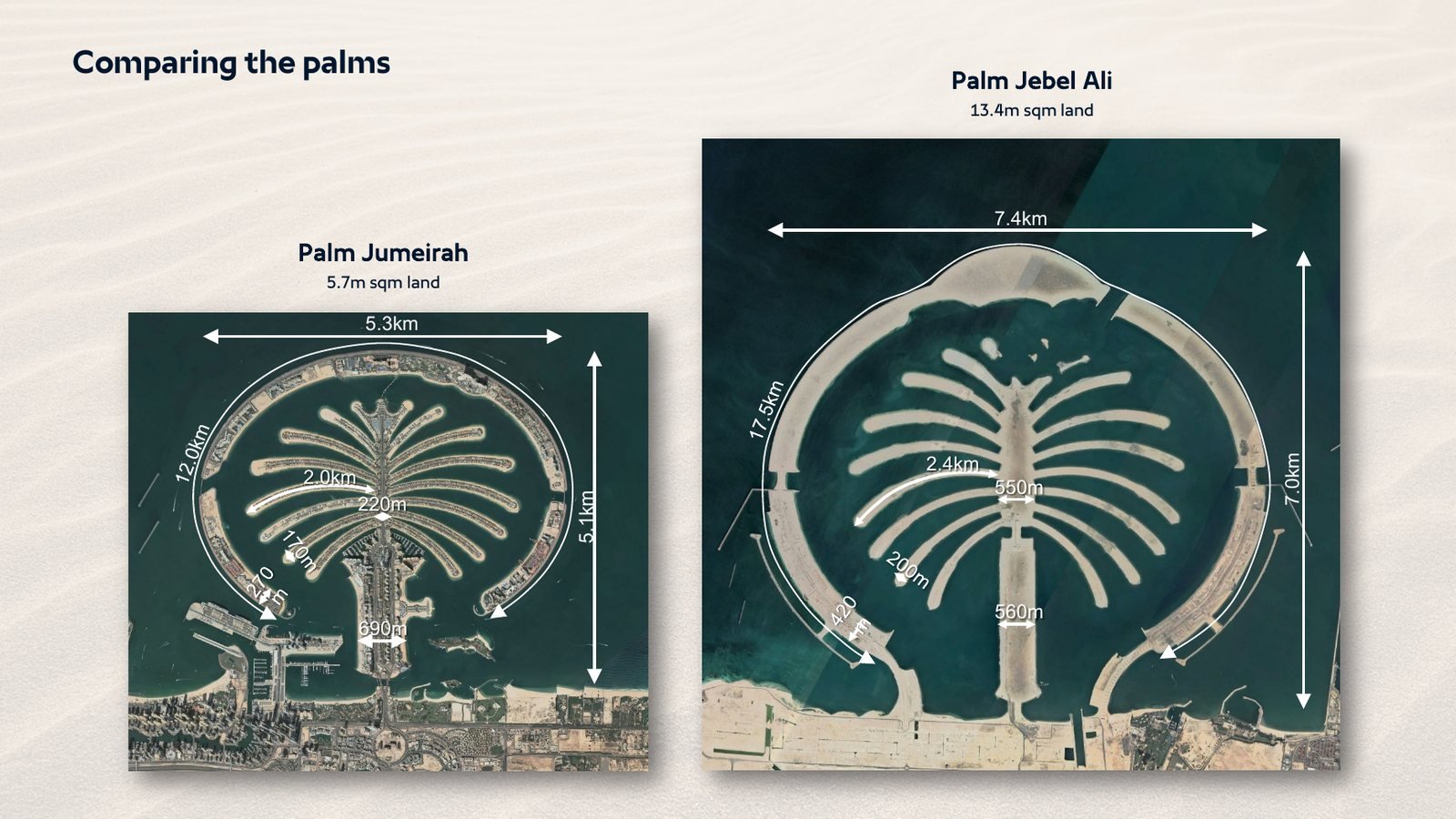
The comparison that matters isn't just total size. Palm Jebel Ali's crown spans 7.4 km versus Palm Jumeirah's 5.3 km, frond-to-frond water gaps run ~630 m versus ~400 m, fronds are wider (~200 m vs ~170 m) and the spine is nearly triple the width (560 m vs 220 m). Twenty years of Palm Jumeirah lessons — narrow fronds, tight water, congestion at the trunk — were engineered out. That's the genuine product improvement underneath the marketing.
Location context: the island sits in Dubai's southern growth corridor — Nakheel quotes 20 minutes to Al Maktoum International (the airport Dubai is building its next two decades around), with connectivity via Sheikh Zayed Road (E11), beside the 2,000-hectare Jebel Ali Marine Sanctuary.
The 80/20 plan, decoded
Most Palm Jebel Ali villa phases use Nakheel's 80/20 construction-linked plan: 20% at booking, 60% in installments during construction, 20% at handover. The installments are tied to construction milestones, not just dates — and the plan is interest-free, which matters more than people realize (compare that to financing costs on an equivalent mortgage).
Here is what that looks like in real dirhams on an entry-level AED 18M villa:
| Stage | Share | Amount (AED) |
|---|---|---|
| Booking | 20% | 3,600,000 |
| Construction installments | 60% | 10,800,000 (staged) |
| Handover | 20% | 3,600,000 |
| Plus: DLD registration fee | 4% | 720,000 |
The line most brochures leave out is the last one. The 4% Dubai Land Department fee (plus Oqood registration and admin costs) is payable on top of the purchase price. On an AED 18M villa that is a further AED 720,000 — budget for it from day one, not as a surprise at registration.
Handover dates: targets, not promises
Here is the current, verifiable picture as of mid-2026: the first ultra-luxury villas are approaching completion with phased handovers beginning late 2026 into 2027 for the early Beach and Coral Collection fronds. In April 2026, Nakheel awarded a further AED 3.5 billion in contracts for 544 villas across Fronds A–F, targeting Q4 2028 completion. Full island buildout — hotels, malls, public realm — extends well into the 2030s.
The honest historical context: Palm Jumeirah's first residents moved in during 2006–2007 to construction dust, incomplete roads and limited services, and its destination infrastructure took over 15 years to fully materialize. Palm Jebel Ali is bigger. Treat every stated handover date as a target with tolerance, and plan your finances so a 1–2 year slip is an inconvenience, not a crisis.
Your money is protected — here's the actual mechanism
Every dirham you pay goes into a RERA-approved escrow account under Dubai's Trust Account Law (Law 8 of 2007). The developer cannot touch that money freely — it is released in stages against RERA-certified construction progress. Your purchase itself is registered in Oqood, DLD's interim register, so your ownership right exists on government record before the title deed does.
Add to that the counterparty: Nakheel is government-linked through Dubai Holding, with the strongest delivery track record in exactly this product type. That does not make delays impossible — it makes the 2009-style total-loss scenario structurally very unlikely.
The three risks I put in writing
1. Exit liquidity before handover. The resale market for off-plan Palm Jebel Ali units exists but is thin. If your plan depends on flipping mid-construction, understand you may wait for a buyer or discount to find one. Early phases have seen strong paper appreciation — paper gains and realized gains are different animals.
2. Absorption. The island plans homes for 35,000 families over a decade, into a Dubai market that in 2026 is already digesting record supply. Long-term scarcity logic (finite beachfront) is sound; medium-term price compression along the way is entirely possible.
3. Service charges are not yet known. Master community and villa service charges for a brand-new mega-island will only crystallize closer to handover. On Palm Jumeirah, owners learned these numbers matter enormously to net yield. Budget conservatively.
Who this fits — and who it doesn't
It fits: buyers with a genuine 10–15 year horizon, cash flow that comfortably absorbs the installment schedule plus fees, and the temperament to own through a construction phase and a possible soft patch. For that buyer, entering an iconic, finite asset class at a ~60% discount to its mature sibling is a rational, calculated position.
It does not fit: buyers stretching to reach the entry price, anyone needing liquidity within 12–18 months, or anyone buying purely because launches "sell out in hours." Urgency is a sales tool. Scarcity is real on a 15-year view — it is not real this Friday.
Frequently asked questions
What is the minimum I need to buy into Palm Jebel Ali?
For current villa phases: roughly AED 3.6M at booking (20% of an AED 18M entry villa), plus the 4% DLD fee shortly after. Later phases may introduce apartments and lower entry points in the marina and resort districts — those structures are not yet released.
Is the payment plan negotiable?
The structure (80/20, construction-linked) is set by Nakheel per phase and unit type — some releases have carried post-handover options on select types. What varies phase to phase is the installment calendar. Always verify the exact schedule for the specific unit before signing; I do this verification as standard.
Can overseas buyers purchase, and can I do it remotely?
Yes — Palm Jebel Ali is freehold, open to all nationalities. The full process (EOI, booking, SPA signing, Oqood registration) can be completed remotely with a Power of Attorney or digital processes. UK and international buyers make up a large share of early purchasers.
What happens if the project is delayed or cancelled?
Delays: your installments remain construction-linked, so payment obligations track actual progress. Cancellation (structurally unlikely for a government-linked flagship): Dubai's framework routes cancelled projects to a judicial committee that liquidates the escrow account to refund buyers — the protection regime built after 2008 exists precisely for this.
Should I buy Palm Jebel Ali or ready property on Palm Jumeirah?
Different trades. Palm Jumeirah is mature: rental income from day one, proven service charges, deep resale market — you pay full price for certainty. Palm Jebel Ali is early-cycle: discount pricing, zero income for years, timeline risk — you are paid (in discount) for uncertainty. The right answer depends on whether you need income now or growth later. That is exactly the conversation a 15-minute briefing settles.